Loud snoring and gasping nights often point to obstructive sleep apnea. Camilla Ohl founded Ohl Consulting in Houston to guide this kind of airway care. She brings more than 20 years of experience in dental sleep medicine. A mandibular advancement device is the leading oral appliance for snoring and mild to moderate apnea. It gently holds your lower jaw forward so the airway stays open.
A custom mandibular advancement device near the Texas Medical Center usually costs $500 to $4,500. Most medical plans help with that cost. To see where it fits, explore oral appliance therapy and dental sleep apnea appliances in Houston. Both pages show how this device fits into a full airway plan across Houston.
What Is a Mandibular Advancement Device and How Does It Work?
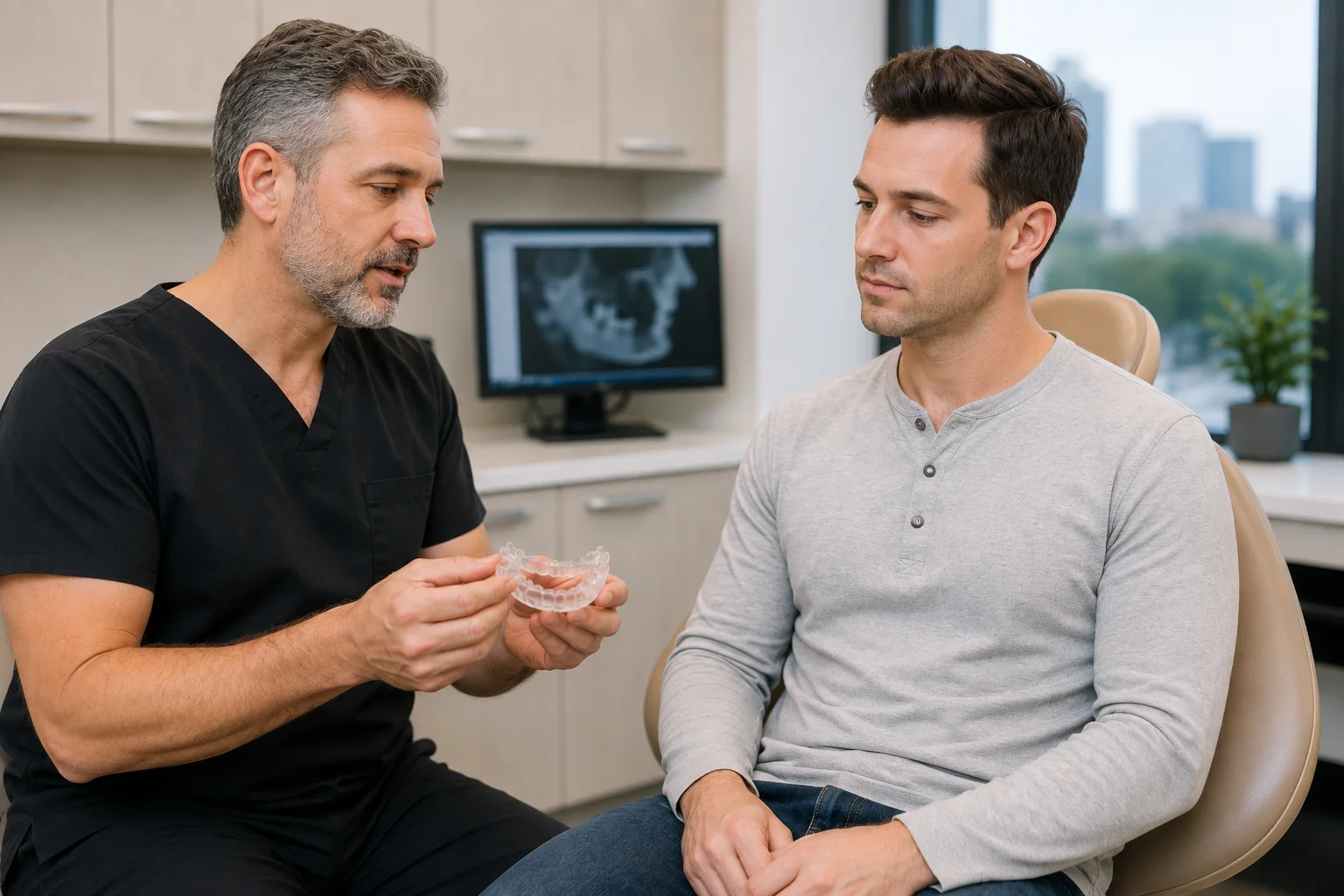
A mandibular advancement device is a custom oral appliance you wear while you sleep. It fits snugly over your upper and lower teeth. The device holds your lower jaw in a slightly forward position all night. That shift pulls your tongue and soft tissue away from your throat. With the airway held open, snoring and breathing pauses both drop.
Sleep doctors and dentists often call it a MAD or an oral appliance. The American Academy of Sleep Medicine recognizes it as a standard apnea treatment. A trained dentist fits the device and adjusts it to your exact bite.
Most devices allow small forward adjustments over several weeks, a process called titration. Your dentist moves the jaw forward in tiny steps to find your best setting. That careful tuning is what separates a custom device from a drugstore one.
Who Is a Good Candidate for a Mandibular Advancement Device?
A mandibular advancement device works best for snorers and people with mild to moderate sleep apnea. It also helps those with severe apnea who cannot tolerate a CPAP machine. Doctors confirm the right fit with a sleep study and a dental exam. The device is a recognized first-line option for mild to moderate OSA.
You may be a strong candidate if several of these apply to you.
- Loud, habitual snoring most nights
- Diagnosed mild or moderate sleep apnea
- Trouble tolerating or sticking with CPAP
- Healthy teeth and gums that can anchor a device
- A preference for a quiet, travel-friendly option
A dentist checks your teeth, jaw, and bite before recommending the device. That exam rules out problems that could make the appliance uncomfortable.
How Well Does a Mandibular Advancement Device Work?
A mandibular advancement device works well for most people who try one. A multicenter study found the device reduced AHI in 93% of patients, with success in 69%. Success there meant cutting the apnea-hypopnea index by at least half. Results were strongest in moderate cases, where 81.6% of patients succeeded.
Long-term results hold up well over the years too. A meta-analysis found the device lowered AHI by about 16.8 events per hour across many studies. Patients also reported less daytime sleepiness after a year of nightly wear.
Many people stick with the device better than they stick with CPAP. Research shows higher long-term adherence with oral appliances than with CPAP. A treatment you wear every single night is the one that protects your health.
Custom or Over-the-Counter Mandibular Advancement Device: Which Is Better?
A custom mandibular advancement device outperforms any boil-and-bite version you buy online. Custom devices are molded to your exact bite and adjusted by a dentist over time. Over-the-counter guards offer a rough, one-size fit with no medical oversight. For diagnosed apnea, only a custom, titratable device gives reliable results.
Here is how the two options compare on the points that matter most.
| Feature | Custom Device | Over-the-Counter Device |
| Cost | $500 to $4,500 | $30 to $150 |
| Fit | Molded and dentist-adjusted | Generic boil-and-bite |
| Titration | Yes, step by step | No |
| Best for | Diagnosed sleep apnea | Light, occasional snoring |
| Insurance | Often covered as DME | Not covered |
An over-the-counter device may quiet light snoring for a while. For real sleep apnea, though, the custom device is the safer, proven choice. It also lets your dentist track results and fine-tune the fit.
How Much Does a Mandibular Advancement Device Cost in Houston?
A custom mandibular advancement device usually costs $500 to $4,500 in the Houston area. The final price depends on the device, the lab, and the titration visits. Most medical plans treat the device as durable medical equipment for apnea. That coverage often brings your out-of-pocket cost down sharply.
Insurance for these devices runs through medical plans, not dental ones. Medicare allowed amounts for oral appliance therapy run about $1,000 to $1,900. Coverage usually requires a sleep study confirming your apnea diagnosis first.
Plan to budget for follow-up visits during the titration phase as well. Those visits dial in the jaw position that controls your apnea best. The investment protects your sleep, your heart, and your daytime focus.
What Are the Side Effects of a Mandibular Advancement Device?
Most side effects of a mandibular advancement device are mild and fade quickly. Early on, you may notice a dry mouth, extra saliva, or sore jaw muscles. These usually settle within the first few weeks of nightly wear. A small number of people see minor bite changes over the longer term.
The longer-term effects are worth knowing before you start.
- Dry mouth or extra saliva at first
- Temporary jaw or tooth soreness
- Mild gum or cheek irritation
- Small shifts in bite, overjet, or overbite over years
- Occasional morning bite changes that ease off
Regular dental checkups catch these changes early and keep them small. Your dentist can adjust the device whenever the fit starts to drift.
How Do You Get a Mandibular Advancement Device in Houston?
You do not have to choose between loud nights and an unwanted CPAP machine. Ohl Consulting guides Houston dental teams from the Texas Medical Center to Sugar Land. Camilla Ohl spent more than 20 years in dental sleep medicine. She scaled 350-plus dental sleep partnerships at VIVOS. A trained dentist then confirms your diagnosis and fits the device.
If snoring or apnea is wearing you down, this device is worth a look. Camilla Ohl brings two decades of dental sleep medicine experience to this Houston work. See your full options on the dental sleep apnea appliances page. A short exam and sleep study point you toward the right fit.
How long does a mandibular advancement device last?
A custom mandibular advancement device usually lasts about three to five years with daily care. Insurers often set a five-year replacement window for these appliances. Replace yours sooner if it cracks, loosens, or stops controlling your snoring. The American Academy of Sleep Medicine backs regular dental follow-up to track wear.
Does insurance cover a mandibular advancement device?
Most medical plans cover a custom device as durable medical equipment for apnea. Coverage runs through medical insurance, not dental, once a sleep study confirms OSA. Medicare may also cover a custom device under specific criteria. Always check your plan and ask for a written pre-estimate first.
Can a mandibular advancement device treat severe sleep apnea?
A mandibular advancement device can help severe apnea, though CPAP remains the first choice there. In one study, 73.3% of severe patients still succeeded with the device. It is a strong option when someone cannot tolerate CPAP at all. The American Academy of Sleep Medicine lists it as a second-line choice for severe cases.
How do I clean a mandibular advancement device?
Rinse the device each morning and brush it gently with a soft toothbrush. Let it dry fully before storing it in a clean, vented case. Avoid hot water, which can warp the material and ruin the fit. Both the Cleveland Clinic and the Sleep Foundation recommend this simple routine.