Most dental practices are surrounded by patients with undiagnosed sleep apnea, even though those patients are already coming in for routine care. They show up for cleanings and exams every day with symptoms like snoring, fatigue, or grinding, yet sleep issues often go unaddressed. This gap usually exists because sleep apnea is not built into daily team systems, not because the dentist lacks interest or training.
At Ohl Practice Management & Consulting, Camilla Ohl brings more than two decades of hands-on experience in dental operations, team training, and practice growth. She has helped practices turn complex service lines, including dental sleep medicine, into clear workflows teams actually use. This article serves as a practical field guide for dental practices that want to train their teams to screen, educate, and convert sleep apnea patients consistently.
Why Your Team, Not Just You, Drives Sleep Apnea Growth
Sleep apnea does not grow as a doctor-only service, even when the dentist is highly trained. Patients interact with the team far more often than they interact with the doctor. Every one of those interactions either builds confidence or quietly stops momentum.
Many adult dental patients show risk factors such as snoring, fatigue, teeth grinding, scalloped tongues, or restricted airways. Despite this, most practices only treat a few sleep cases per month. The reason is not lack of opportunity, but lack of consistent screening and follow-through.
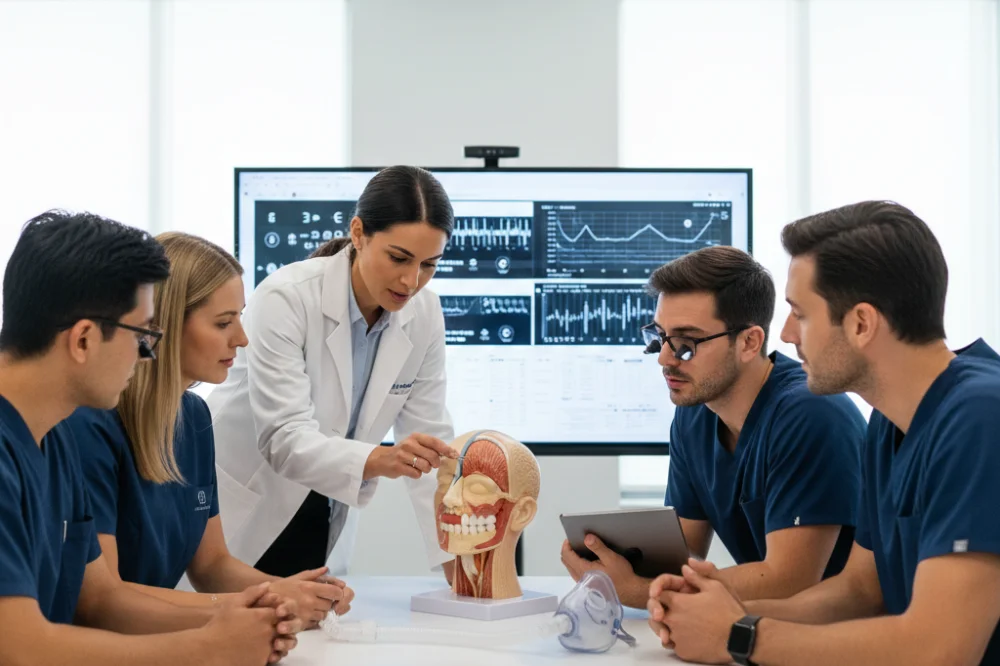
Practices that grow sleep apnea care treat it as a shared responsibility. Front desk teams listen for cues and schedule appropriately. Hygienists and assistants educate chairside and document risk clearly. The dentist and treatment coordinator focus on diagnosis coordination, referrals, and appliance delivery instead of restarting the conversation each time.
Designing a Simple Sleep Screening Workflow for Your Practice
The strongest sleep screening workflows feel routine instead of disruptive. Patients are more open when screening is positioned as a normal part of adult care rather than a separate conversation. Teams also stay more consistent when screening fits naturally into visits they already manage every day.
A single standardized screening tool should be built into the intake or medical history so it cannot be skipped. Front desk team members review responses early and flag concerns before the patient is seated. Hygienists then confirm answers, note visible airway signs, and follow clear thresholds that define when a sleep consult or testing discussion should happen during the same visit.
Training Hygienists and Clinical Team to Educate Confidently
Hygienists spend more uninterrupted time with patients than any other role in the practice. Patients are relaxed, listening, and already thinking about long-term health during hygiene visits. This creates a natural opening for meaningful sleep conversations.
Training should focus on connection rather than diagnosis. Hygienists learn how oral findings relate to airway health, sleep quality, and daily energy using simple and relatable language. This approach builds understanding without overwhelming or alarming the patient.
Confidence grows through repetition and support. Short role-play exercises during team meetings allow hygienists and assistants to practice real conversations they will have chairside. Over time, sleep discussions feel natural instead of awkward or rushed.
Front Desk and Phone Training That Converts Conversations
Many sleep opportunities are lost before a patient ever reaches the chair, and the front desk is often where that happens. Phone calls and recall conversations usually determine whether sleep concerns move forward or quietly disappear. Without clear training, team members default to routine scheduling and miss important airway cues.
Front desk teams should be trained to recognize phrases like snoring, daytime fatigue, poor sleep, or CPAP frustration and know how to respond clearly. These cues allow the team to guide the caller toward screening or a dedicated consult instead of a standard hygiene visit. Clear scripts build confidence, help validate concerns, and make the next step easy to understand.
Case Acceptance Systems That Turn Screening Into Starts
Screening alone does not create results or revenue. Conversion happens when education leads to a clear decision and a scheduled next step. Without structure, even interested patients drift away.
Most resistance comes from confusion rather than refusal. Patients worry about testing, cost, or time because the process feels unclear. Calm, organized explanations reduce fear and build trust.
Effective case acceptance connects symptoms to real-life impact. It explains the testing pathway, outlines treatment options clearly, and schedules the next step before the patient leaves or hangs up. Momentum is essential for follow-through.
KPIs That Keep Your Sleep Program Growing
Sleep programs stall when effort is not measured or reviewed in a consistent way. Teams perform better when goals are visible and expectations are clear, especially when sleep care is still a newer service line. Metrics turn good intentions into accountability by showing whether the system is actually working.
Tracking does not need to be complicated or expensive to be effective. Monitoring screening rates, consult offers, and testing completion quickly reveals where patients fall out of the process and where the team needs support. Reviewing these numbers monthly keeps sleep care visible, reinforces positive behavior, and helps the team see progress instead of guessing.

Building a Sustainable Training Program for Your Team
One-time training rarely creates lasting change in a dental practice. Sustainable sleep programs are built through reinforcement, ownership, and repetition. Training must be treated as ongoing rather than optional.
Combining external education with in-office practice works best. Assigning a sleep champion ensures protocols stay current and metrics are reviewed consistently. This role prevents sleep initiatives from fading over time.
What a Trained Team Does Differently
Before training, sleep conversations feel inconsistent and reactive across the practice. Patients often receive mixed messages or no message at all, which creates confusion and hesitation. Team members may avoid the topic entirely because they are unsure how to explain sleep apnea or what should happen next.
- Screening happens routinely for adult patients rather than only when symptoms seem obvious.
- Patients hear consistent language from the front desk, hygienist, and dentist.
- Next steps are scheduled immediately instead of being left open-ended.
After training, conversations feel calm, coordinated, and intentional. The team works together using the same language and expectations, which builds confidence internally and trust externally. Patients are far more likely to move forward because the process feels organized and supportive rather than improvised.
Screen, Educate, Convert Across Roles
Clear role ownership prevents dropped handoffs and internal confusion throughout the patient journey. Each team member knows when to act, what to say, and what outcome they are responsible for delivering. This clarity removes hesitation and keeps conversations moving forward.
- Front desk teams identify sleep-related cues and schedule appropriate visits.
- Hygienists and assistants screen, educate, and document risk.
- Dentists and coordinators guide diagnosis, referrals, and treatment decisions.
When roles align, patients move forward with fewer delays and greater confidence throughout the process. Each step in the workflow supports the conversation at the right moment, so nothing feels rushed or improvised. This structure reduces reliance on memory, personality, or last-minute intervention by the dentist and allows the team to work with clarity and consistency.
Sleep Apnea Workflow Comparison
Before implementing a team-based system, sleep efforts often feel scattered and unpredictable inside the practice. Screening may happen occasionally, but it depends on memory and time rather than a defined process. Because follow-through is inconsistent, results vary widely and frustrate the team.
| Area | Untrained Team | Trained Team |
| Screening | Inconsistent | Routine |
| Patient Education | Doctor-dependent | Team-driven |
| Case Acceptance | Unpredictable | Trackable |
After implementation, workflows become consistent and measurable across the entire team. Patients move through defined steps, and team members clearly see how their actions affect outcomes. This predictability supports growth, reduces internal stress, and builds patient trust over time.
Taking the Next Step With Confidence
Training your team to screen, educate, and convert sleep apnea patients turns everyday dental visits into meaningful airway care. Clear workflows and shared language replace hesitation with confidence and consistency. Patients benefit from clarity, and teams benefit from structure.
Camilla Ohl and Ohl Practice Management & Consulting help practices build sleep systems that last. With the right structure in place, your team gains confidence, patients gain trust, and dental sleep medicine becomes a sustainable growth driver.
Frequently Asked Questions
How long does it take to train a dental team for sleep apnea screening?
Most practices can implement a basic screening and education system within 30 to 90 days when training is structured and reinforced consistently. Confidence improves quickly when roles, scripts, and workflows are clear. Early momentum often builds faster than expected.
Do hygienists need special certification to talk about sleep apnea?
Hygienists do not diagnose sleep apnea, but they can screen and educate patients when trained on approved questionnaires and airway health language. Clear boundaries and role clarity make these conversations appropriate and effective. Patients often respond well when education feels calm and informative.
Why do screened patients fail to move forward with treatment?
Patients usually stall because the process feels confusing or overwhelming. When education is consistent and next steps are scheduled, follow-through improves significantly. Clear explanations reduce fear and indecision.
Is sleep apnea worth focusing on in a busy practice?
Practices often see strong demand because many patients already show risk factors. A trained team allows sleep care to grow without adding significant chair time or stress. This makes sleep dentistry both impactful and practical.